How Much Does Website Development Cost in 2026: Real Budgets, Website Types, and What Actually Drives the Price
A practical breakdown of website development cost in 2026: from landing pages and corporate websites to e-commerce and custom platforms. We explain what drives the price, where hidden costs appear, what to evaluate before you hire a team, and how PAS7 Studio approaches web solutions of any complexity.
In 2026, website development can cost anywhere from a few hundred euros for a simple business landing page to tens of thousands of dollars for a full e-commerce build or custom platform. The main price drivers are website type, number of pages, design depth, CMS, integrations, SEO, analytics, multilingual setup, support, and how quickly decisions are made during the project.
What matters to understand right away
If you want the short version: in 2026 you are not paying only for page design. You are paying for a working web system that should attract traffic, convert visitors, stay understandable for search and AI discovery, and remain manageable for the team behind it.
EUR300, a business website or entry-level e-commerce build from EUR500, and custom corporate platforms or systems from EUR1,500. That is a starting point, not a final quote. [9]Why a website costs differently in 2026 than it did a few years ago
In 2026, a website is rarely just a brochure. For a business, it is simultaneously a lead acquisition channel, a trust layer, an SEO asset, a CRM and analytics touchpoint, and increasingly a surface for AI search and GEO-style discovery scenarios. If a page fails to explain the offer, index properly, respond quickly, or hold a clear structure, it becomes an expense instead of an asset. [1][2][3][4]
Google explicitly recommends building content for people, not for mechanical keyword stuffing. In practice, that means strong web development now includes more than UI: it also includes page logic, information architecture, metadata templates, schema, internal linking, lead capture flows, and useful analytics. [1][2]
Another 2026 factor is performance. Web.dev keeps highlighting INP and interface responsiveness, which puts pressure on sites built with heavy templates, excessive scripts, overloaded site builders, and chaotic third-party plugins. If you want strong ads, solid SEO, and good mobile conversion, performance is no longer a nice extra. [3]
Quick snapshot: what different types of web projects cost
This is not a universal price list for every agency in the world. It is a practical map of ranges. Some numbers come from public market guides, and some come from PAS7 Studio starting packages.
Clutch pricing guides in 2026 show two things at once: many reviewed projects still look budget-friendly on paper, but agency averages grow quickly as soon as you introduce more complex features, integrations, longer timelines, and custom flows. That is why it makes no sense to compare a landing page and a web platform in one flat row. [5][6]
from EUR300
Our starting level for a fast business website or landing page. Final cost depends on content, number of sections, design depth, forms, analytics, and SEO preparation. [9]
from EUR500
A realistic starting point for a multi-page website with clear service structure, analytics, indexation setup, and integrations. [9][10]
Website type shapes the budget faster than any single plugin
| Comparison point | Best fit | Typical scope | Realistic budget | Timeline |
|---|---|---|---|---|
| Business landing page | One main offer, ad traffic, demand validation, fast launch | Hero, trust sections, FAQ, form/CTA, baseline SEO, analytics, fast mobile-first UI | From EUR300 at PAS7, while market pricing often ranges from low hundreds to low thousands depending on custom work | Usually 2-4 weeks |
| Corporate website | Several services, brand credibility, case studies, longer lead journey, SEO service cluster | Multi-page structure, service page templates, blog/case studies, schema, analytics, CRM forms | From EUR500 at PAS7, with the market varying widely depending on page count and content depth | Usually 4-8 weeks |
| E-commerce | Catalog, checkout, payments, search, filters, orders, marketing, retention | Catalog, product pages, checkout, cart, CMS, search/filter, analytics, technical SEO, support | Starts at EUR500 at PAS7, but market guides for full stores usually point much higher | Usually 8-16+ weeks |
| Custom web platform | User accounts, roles, dashboards, internal operations, automation, data-heavy workflows | Auth, roles, state logic, integrations, backend, database, admin panel, security, observability, support | From EUR1,500 at PAS7 and up depending on architecture, roles, and integrations | From 8 weeks to several months |
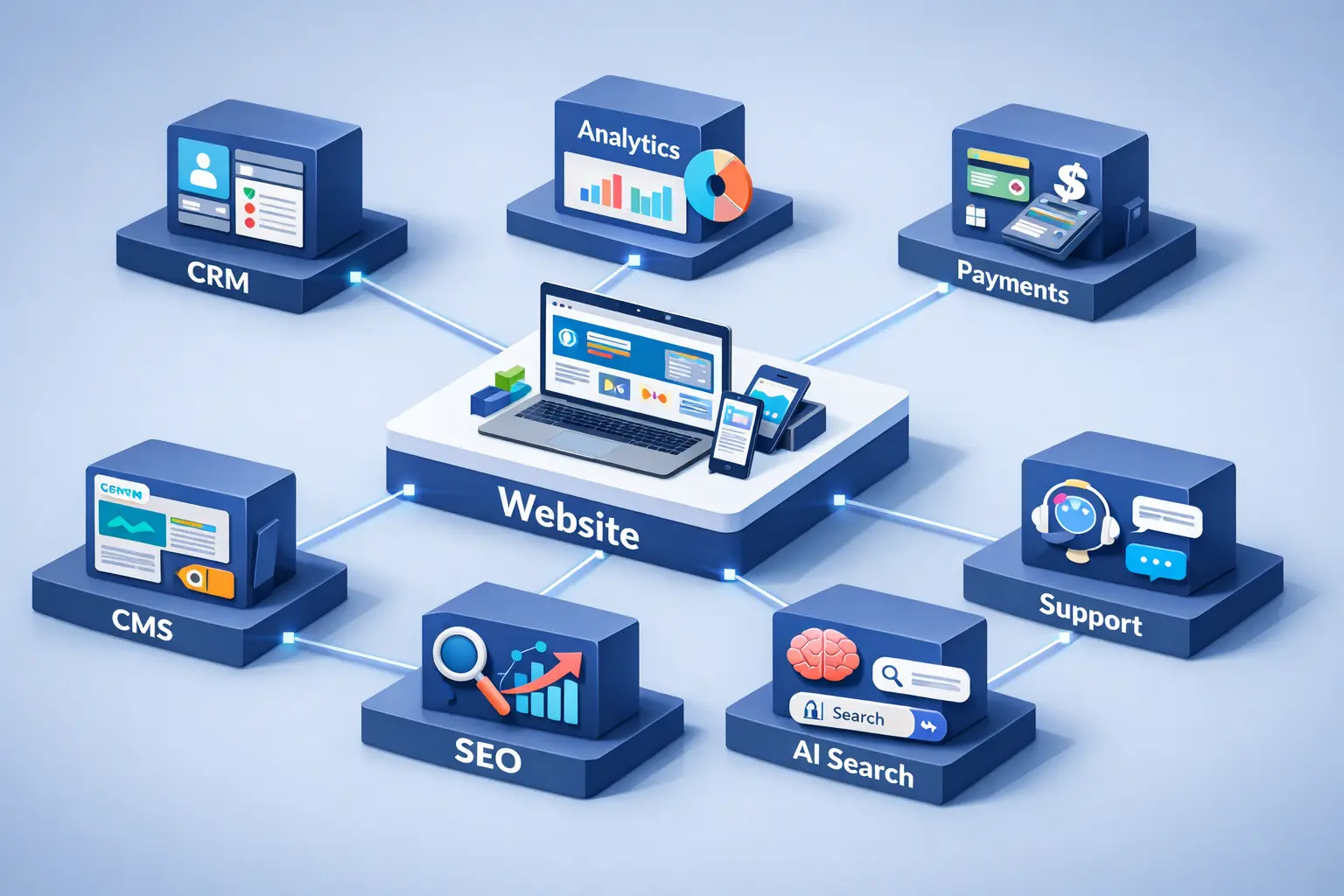
Three simple visuals for thinking about website budget in 2026
These diagrams do not replace a brief, but they show clearly why website budget cannot be reduced to one line like 'design + development'.
Budget map: the further you move from a landing page toward a platform, the more the budget is shaped by data, roles, integrations, and support.
Main cost drivers: content, design, CMS, integrations, analytics, SEO, multilingual structure, and speed of approvals.
Total project cost includes build, launch, support, and growth. The most expensive scenario is launching without a development plan.
Six factors that move the estimate the most
In practice, clients rarely overpay for 'code itself'. They pay for uncertainty, complexity, or scale of responsibility.
1. Scope and number of templates
One page, five pages, and thirty pages are different projects. The same applies to a single article template versus separate templates for services, case studies, catalog pages, blog posts, or user areas.
2. Content and copy
If texts, structure, visuals, and product materials do not exist yet, someone still has to produce, structure, review, and upload them. WebFX explicitly lists copywriting as a visible cost driver. [7]
3. Design level
4. CMS, roles, and admin logic
A site without editorial workflows is very different from a site where your team manages content, orders, pages, categories, translations, or internal moderation states.
5. Integrations and business logic
What PAS7 Studio actually includes in its approach
On the PAS7 Studio web development service page, we state directly that we build landing pages, corporate websites, multilingual business sites, e-commerce, custom sites with CRM and API integrations, technical SEO, Core Web Vitals optimization, GA4/GTM implementation, and post-launch support. That is why we are comfortable taking on web solutions of very different complexity, from a simple landing page to a system-level product. [9]
We do not sell just a design mockup or just development. Our web development approach is built around business goals, structure, release quality, and growth after launch.
Briefing, scope definition, and KPI prioritization before design and code. [9]
Information architecture, UX, content templates, and conversion scenarios. [9]
Modern-stack development with a focus on speed, SEO-ready structure, and scalability. [9]
CRM, API, payments, forms, analytics, GTM, GA4, multilingual content, and editorial workflows. [9][10]
QA, release, indexation checks, metadata validation, schema, sitemap, robots, and post-launch support. [9]
Why a 'cheap website' often becomes the most expensive scenario
The problem is not that a low budget is inherently bad. The problem is that businesses often buy the wrong type of solution.
Comparing websites only by the first-screen visual. Two similar hero sections can hide completely different levels of integrations, SEO, analytics, and editorial logic.
Leaving texts, structure, photos, legal pages, and approvals outside the estimate. Content that appears on the last day almost always breaks the timeline.
Expecting e-commerce or platform logic on a landing-page budget. If you need a catalog, checkout, roles, dashboards, APIs, and automation, it should be scoped as a system, not just a website.
The most useful question before kickoff
Are you buying a website as a marketing page, a content system, or a business tool? Until that is clear, the estimate will usually stay inaccurate.
What to choose: site builder, custom website, or full platform
The right choice depends not on trends, but on task complexity, launch speed, expected SEO performance, and how much control you need after release.
Site builder / template
Best for a very simple start when you need a basic web presence without complex integrations and without strict requirements for SEO, performance, or scale. A reasonable path for microbusinesses or temporary MVPs. [5]
Custom business landing page
Best when you need to package one core offer quickly and cleanly, build strong structure for ads, baseline SEO, analytics, and lead capture. For many small and mid-sized businesses, this is the most efficient starting point. [9]
Custom corporate website
Practical rule
If your business process does not fit into a template without compromises, it is usually better to price a custom solution immediately instead of overpaying for workarounds later.
What to prepare to get a realistic estimate instead of a random number
The stronger the input scope, the more accurate the price. That saves money both for you and for the team building the project.
Describe the main business goal of the website.
Leads, sales, demo requests, a content hub, a customer portal, or an internal system. One website cannot serve every role equally well without clear priorities.
List the pages and templates you need.
Not only 'home + contacts', but also services, case studies, blog, careers, FAQ, product pages, account areas, and legal pages.
Define who provides content and when.
Texts, photos, logos, case studies, testimonials, translations, legal pages, and brand materials. Content is almost always critical for timing.
List all integrations in advance.
CRM, email, GA4, GTM, Meta Pixel, calendars, payments, ERP, partner APIs, webhooks, and import/export workflows.
Define the level of SEO and multilingual setup.
Do you need schema, sitemap, blog, category pages, hreflang, metadata templates, local landing pages, and an AI-ready content structure?
FAQ
The range is very wide. A simple business landing page may start from a few hundred euros, while e-commerce or a custom platform can easily move into the range of several thousand to tens of thousands of dollars. The final cost depends on website type, content, design, CMS, integrations, SEO, analytics, support, and business logic complexity. [5][6][7][8][9]
Because the word 'landing page' does not describe scope. One can be a single page with no integrations, while another includes offer research, custom design, strong copywriting, animation, forms, analytics, CRM, A/B-ready structure, SEO sections, and post-launch support. Technically, those are different products.
A full e-commerce website is usually more expensive because, in addition to content pages, you also need catalog logic, cart, checkout, payments, filters, search, product management, order statuses, marketing analytics, and support. That is why market guides consistently show higher ranges for e-commerce. [4][7][8]
A builder is enough for a simple launch without a serious SEO strategy, non-standard logic, or integrations. If you need control over performance, technical SEO, multilingual content, CRM, payment flows, advanced forms, or roles, a custom website usually becomes the better investment even in the medium term. [3][5][9]
A baseline SEO layer should be included if the website is built seriously. That means metadata, sitemap, robots, schema, canonical setup, clean heading structure, indexation, strong mobile performance, analytics, and internal linking logic. But content SEO strategy, separate page clusters, and long-term growth work are usually scoped separately or included in a broader engagement. [1][2][3][9]
Yes. We build not only landing pages, but also corporate websites, e-commerce, multilingual web projects, custom systems, CRM and API integrations, analytics, technical SEO, performance optimization, and post-launch support. Our service pages describe that directly, together with starting ranges and typical timelines. [9][10]
In our service guidance, a landing page usually takes 2-4 weeks, a corporate website 4-8 weeks, and e-commerce or a complex platform 8-16+ weeks. Real timelines depend on content readiness, number of design iterations, integrations, and approval speed. [9][10]
Sources
We used only sources that directly support the statements about budget ranges, requirements for modern websites, performance, e-commerce, and our own service framing.
Need a website that works as a business tool, not just something that looks neat?
PAS7 Studio builds web solutions ranging from business landing pages to custom platforms: corporate websites, e-commerce, CRM and API integrations, analytics, technical SEO, Core Web Vitals hardening, and post-launch support. [9][10] If you need a grounded budget estimate, we can quickly break the project into scope, risks, stages, and recommend the format that matches your goals instead of just showing the smallest number in a table.
Related Articles

How to Add Mau Saver to a Telegram Group and Save Media in Chat
A practical guide to adding Mau Saver to a Telegram group and downloading videos, audio, and posts directly in the chat.

How to Advertise to an International Telegram Media Audience
A practical guide for advertisers: reach an international Telegram audience through Mau Saver Bot, group placements, pinned posts, and native media integrations.
AI Assistant Development Cost in 2026: RAG Chatbots, CRM Integrations, Guardrails, and Support
A practical buyer guide to AI assistant development cost in 2026: prototypes, RAG chatbots, knowledge-base assistants, CRM and website integrations, guardrails, evaluations, monitoring, and support.
AI Can Make More. Not Better: What Game Development Research Actually Says
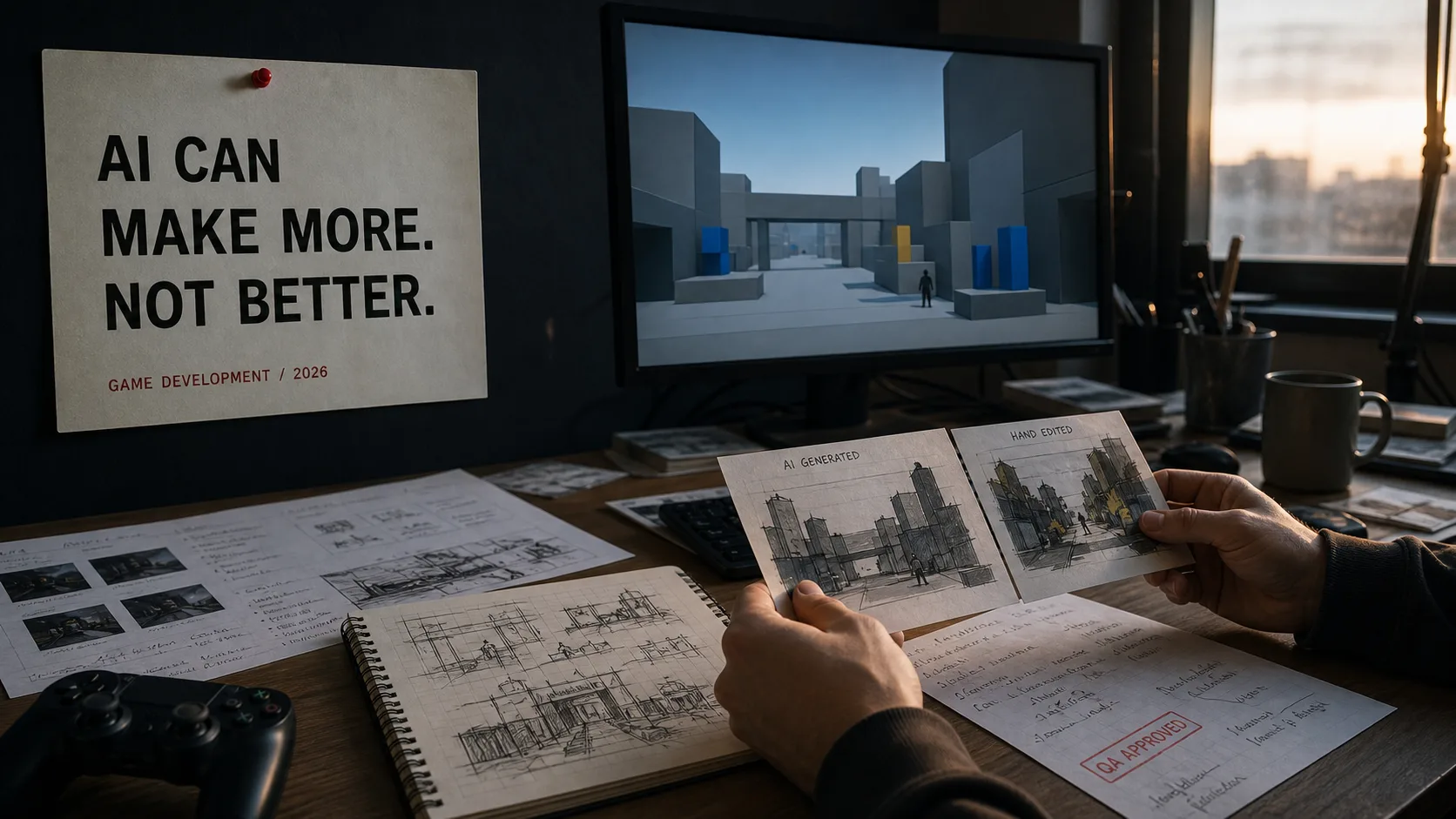
Generative AI is entering game production, but the evidence is more nuanced than the hype. We examine developer adoption, player reception, quality risks, and a practical production model for using AI without outsourcing taste.
Professional development for your business
We create modern web solutions and bots for businesses. Learn how we can help you achieve your goals.