
Cybersecurity in 2026: the most common attacks, how they work, and how to protect yourself and your product
A practical 2026 cybersecurity overview for founders, CTOs, engineers, and product teams: phishing, credential attacks, ransomware, DDoS, supply chain compromise, API flaws, cloud misconfiguration, and concrete defense baselines.
In 2026, breaches most often start with compromised identities, phishing, unpatched vulnerabilities, weak API authorization, DDoS, supply chain issues, or cloud misconfiguration. The practical baseline is MFA, patching, tested backups, least privilege, logging, WAF/CDN, secure SDLC, and a real incident response process.
Cybersecurity 2026: attack, detection, and defense guide
A PAS7 Studio series on practical cybersecurity in 2026: common attack paths, detection signals, and concrete mitigation patterns.
All articles in this guide
01
Cybersecurity in 2026: common attacks and practical defense baseline
A high-level map of attack types and the minimum defense controls for people, products, and teams.
02
Phishing, vishing, and credential theft in 2026
Deep dive into modern phishing and identity abuse patterns with practical defensive controls.
03
Ransomware and data extortion defense in 2026
How to prepare for ransomware with segmentation, backups, incident workflows, and recovery drills.
04
DDoS protection for websites, APIs, and edge
L3/L4/L7 DDoS patterns and architecture-level mitigation for availability and resilience.
05
Supply chain security for dependencies and CI/CD
Dependency risk, artifact trust, CI/CD hardening, and vendor access control.
06
API security: BOLA and access control failures
How authorization failures happen in real products and how to test for them.
07
Cloud misconfiguration and IAM risk in 2026
Cloud posture, IAM boundaries, exposed services, and continuous guardrails.
08
AI-assisted attacks and prompt injection
How AI changes attack speed and how to secure agents, tools, and RAG pipelines.
The uncomfortable truth about cybersecurity in 2026
Most real incidents do not start with movie-style zero-day wizardry. They start with ordinary things: reused passwords, social pressure, stale software, weak access checks, and over-trusted integrations.
What you will get
A practical model for prioritizing risk reduction and building a baseline that is realistic for modern product teams.
What changed by 2026: attacks became an industry
ENISA Threat Landscape 2025 analyzes 4,875 incidents and shows that modern risk comes from overlapping pressure: cybercrime, geopolitics, supply chain weakness, and fast exploitation cycles. [1]
Microsoft Digital Defense Report 2025 points to a high-volume environment where identity abuse, extortion, and ransomware remain central economic drivers for attackers. [2]
Verizon DBIR 2025 analyzed over 22,000 incidents and 12,195 confirmed breaches, with credential abuse and vulnerability exploitation remaining major entry paths. [3]
This means security strategy must move beyond single-control thinking. MFA without logging is weak visibility. WAF without authorization testing does not fix broken access control. Backups without restore drills are assumptions, not resilience.
Summary
In 2026, security is part of product engineering and operations. It is not a post-release checkbox.
What major reports are explicitly saying
These are short, practical signals from high-authority annual reports that shape today’s baseline priorities.
Identity attacks remain highly scalable, and password spray continues to be one of the most practical attacker methods.
Credential abuse and vulnerability exploitation remain top initial vectors, while ransomware continues to hold a strong share of breach cases.
Risk is driven by converging factors across actors, tooling, and dependencies, not isolated technical flaws.
Summary
The pattern is consistent across sources: identity and vulnerability hygiene still matter more than security theater.
Most common attack classes in 2026
This is an operational map, not an academic taxonomy. Use it to align product, engineering, and security decisions.
| Attack type | Entry path | Primary impact | First defensive control |
|---|---|---|---|
| Phishing and social engineering | Email, SMS, calls, fake login flows | Identity compromise, lateral access | Phishing-resistant MFA, user training, email authentication |
| Credential stuffing and password spray | Reused or weak credentials at scale | Account takeover | Unique passwords, MFA, rate limiting, anomaly detection |
| Ransomware and extortion | Phishing, unpatched systems, stolen credentials | Downtime, data theft, recovery pressure | Immutable backups, segmentation, EDR, tested response plans |
| DDoS | Botnets and volumetric or application floods | Availability degradation | CDN/WAF, edge controls, rate limiting, graceful degradation |
| Supply chain compromise | Dependencies, CI/CD, third-party integrations | Build or runtime compromise | Dependency review, signed artifacts, secrets hygiene, vendor controls |
| API access-control failures | Object-level authorization gaps | Cross-tenant data exposure | Server-side authorization checks, negative testing, audit trails |
Attack vectors are rarely isolated. Real incidents often chain multiple weaknesses into one breach path.
Section attack-map screenshot1. Identity attacks: the shortest path into your business
Identity remains the most practical attack surface because it is connected to mailboxes, cloud consoles, repos, support systems, and admin panels.
CISA guidance is clear: strong passwords help, but account protection requires MFA and broader access discipline. [11][12]
Password spray
A small set of common passwords against many accounts at scale. [2]
Credential stuffing
Leaked credentials from prior breaches are replayed against other services where users reused passwords.
Session theft and token abuse
Advanced phishing can steal session context, not only passwords, bypassing weak MFA patterns.
MFA fatigue and social escalation
Attackers combine repeated prompts, urgency, and support impersonation to force approvals.
3. Ransomware now means encryption plus extortion
Modern ransomware incidents combine service disruption with data theft and negotiation pressure.
The practical baseline is not tool-first. It is resilience-first: tested backups, segmented blast radius, endpoint visibility, and rehearsed incident workflows.
44% of breaches
Verizon reports ransomware presence in 44% of breaches, with notable year-over-year growth. [3]
extortion pressure
Microsoft highlights extortion and data theft as central motivations where intent is known. [2]
dwell time still matters
Mandiant continues to show material differences between internally detected and externally surfaced incidents. [5]
4. DDoS: availability is now a security property
Cloudflare reported a 31.4 Tbps attack in 2025. That scale changed assumptions for many teams, including those outside hyperscale environments. [4]
Treat DDoS as a product-reliability concern: cache strategy, queue boundaries, fallback behavior, and endpoint-level abuse controls all matter.
DDoS defense must combine edge protection and application-layer controls for expensive endpoints.
Section ddos-availability screenshot5. Vulnerability exploitation: prioritization matters more than volume
You cannot patch everything instantly. You can prioritize the vulnerabilities that are actually exploited in the wild.
Exploit reality vs disclosure volume
VulnCheck notes that only a small fraction of disclosed CVEs are exploited in the wild, but those need immediate priority. [7]
KEV and exploit intelligence
Use active exploitation signals and advisory context, not only CVSS severity scores.
Edge exposure risk
Network edge and externally reachable devices remain high-risk zones, especially around EOL products. [7]
6. App and API security: logic flaws still dominate
OWASP Top 10:2025 keeps Broken Access Control at the top of web risk categories. [8]
OWASP API Security focuses early on object-level authorization failures. In multi-tenant systems, this is often the highest-impact logic class. [9]
Defensive baseline: explicit server-side authorization checks, negative tests, role-transition tests, and audit logs for sensitive reads and writes.
Broken access control often appears as valid requests with valid tokens but incorrect object permissions.
Section application-api-security screenshot7. Supply chain, cloud, and AI: high speed with high trust boundaries
These layers accelerate delivery, but they can also create direct compromise paths when trust and permissions are loose.
Why teams adopt them
Dependencies, cloud automation, and AI tooling increase iteration speed and reduce repetitive operational work.
Where failures become expensive
Compromised dependencies, overprivileged CI/CD tokens, exposed cloud services, and over-scoped AI tools can create immediate blast radius.
What mature adoption looks like
Private-by-default cloud posture, signed artifacts, dependency governance, and narrow tool permissions with auditable action trails.
AI-specific caution
CrowdStrike highlights AI-enabled adversary behavior and prompt-based abuse patterns that increase operational complexity. [10]
Security should not kill delivery speed, but it must cap damage
In practical terms, security maturity means keeping delivery velocity while reducing blast radius and increasing detection confidence.
How to protect yourself: realistic personal baseline
Personal security should be simple and repeatable. Complexity is the enemy of consistent execution.
Use a password manager and unique passwords
Generate long unique credentials and remove password reuse across services.
Enable strong MFA for critical accounts
Prioritize email, cloud consoles, version control, domain registrar, and finance systems.
Patch quickly
CISA emphasizes timely updates to reduce exploitability of known software flaws. [11]
Keep tested backups
At least one backup path should remain recoverable outside your primary operating environment.
How to protect a product: practical baseline for web, SaaS, and APIs
Most teams do not need enterprise-scale security operations on day one. They do need a coherent baseline.
Map critical assets and ownership
Document where customer data, secrets, admin actions, and backups live, and assign clear ownership.
Lock down identity and admin access
MFA, dedicated admin accounts, least privilege, and recurring access review are mandatory baselines.
Embed security in delivery
Dependency scanning, secrets scanning, and targeted security review for auth, billing, and data flows.
Protect edge and expensive endpoints
Use CDN/WAF, rate limits, caching strategy, and controls against abuse of costly operations.
Prepare detection and response
Centralized logs, high-signal alerts, response owner, communication templates, and escalation paths.
Test recovery, not only backup existence
Define RTO/RPO and run restore drills so recovery remains an operational capability, not a policy claim.
Using NIST CSF 2.0 as a practical planning language
NIST CSF 2.0 is useful as an operating structure for teams that want clarity without unnecessary complexity: Govern, Identify, Protect, Detect, Respond, Recover. [14]
The value is not compliance theater. The value is coherent decision-making, measurable ownership, and repeatable incident behavior.
Common mistakes that create false security confidence
Treating WAF as a substitute for authorization testing.
Using MFA inconsistently across privileged and non-privileged accounts.
Keeping backups without restore validation.
Running overprivileged service accounts in CI/CD and automation tools.
Lacking an incident communication plan for customers and stakeholders.
What we will break down in dedicated deep dives
This post is intentionally broad. Each high-impact area will be covered in dedicated chapters.
Planned - Chapter 2
Identity and phishing
AiTM, MFA fatigue, vishing, infostealers, and practical identity hardening patterns.
Planned - Chapter 3
Ransomware and extortion readiness
Segmentation, immutable backups, response workflows, legal and communication interfaces.
Planned - Chapter 4
DDoS architecture and availability resilience
L3/L4/L7 controls, edge strategy, endpoint abuse mitigation, and graceful degradation.
In 2026, teams win with systems, not with isolated tools
Summary
Security maturity is a practical engineering capability: reduce risk, detect faster, and recover with less damage.
FAQ
Identity compromise remains one of the most practical entry points, especially through phishing and credential abuse. Reports from Microsoft and Verizon continue to reinforce this pattern. [2][3]
MFA is a critical baseline, but not sufficient alone. Strong protection also needs access review, session controls, logging, user training, and tested account recovery procedures. [12][13]
Because valid users can still access invalid objects if server-side authorization is incomplete. This is why OWASP continues to prioritize it as a top risk class. [8][9]
Start with asset inventory, MFA for privileged access, backup and restore testing, patching discipline, API authorization tests, centralized logging, and a minimal incident response workflow.
AI increases attacker speed and social-engineering quality, while AI features in products create new tool-abuse and prompt-injection surfaces that require explicit permission boundaries. [10]
Sources and supporting references
Need a realistic security baseline for your product?
PAS7 Studio can help with practical audits, hardening roadmap definition, API security review, CI/CD guardrails, and incident readiness planning.
Cybersecurity in 2026: common attacks and practical defense baseline
Related Articles
How to Add Mau Saver to a Telegram Group and Save Media in Chat
A practical guide to adding Mau Saver to a Telegram group and downloading videos, audio, and posts directly in the chat.

How to Advertise to an International Telegram Media Audience
A practical guide for advertisers: reach an international Telegram audience through Mau Saver Bot, group placements, pinned posts, and native media integrations.
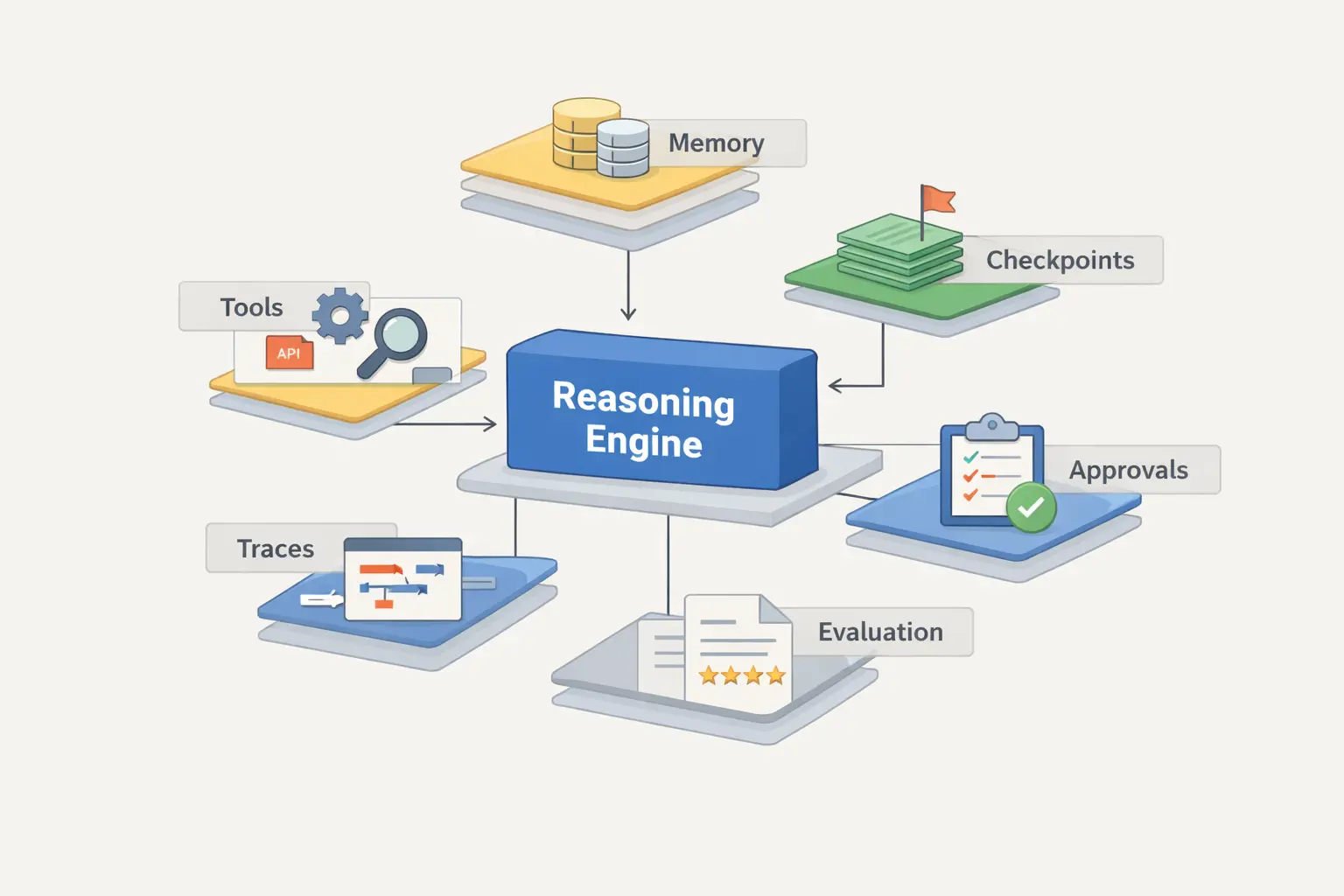
AI Assistant Development Cost in 2026: RAG Chatbots, CRM Integrations, Guardrails, and Support
A practical buyer guide to AI assistant development cost in 2026: prototypes, RAG chatbots, knowledge-base assistants, CRM and website integrations, guardrails, evaluations, monitoring, and support.

AI Can Make More. Not Better: What Game Development Research Actually Says
Generative AI is entering game production, but the evidence is more nuanced than the hype. We examine developer adoption, player reception, quality risks, and a practical production model for using AI without outsourcing taste.